

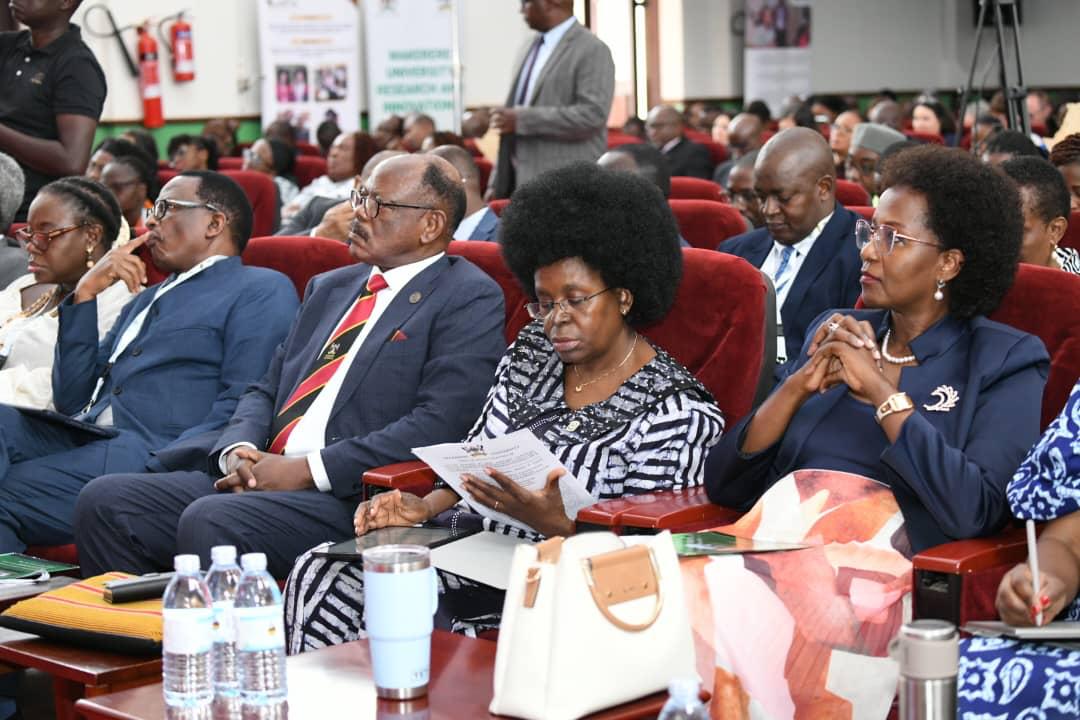
Over 500 scholars, policymakers, and innovators from across the continent have converged in Kampala for the 5th African Research Universities Alliance (ARUA) Biennial Conference, which runs from October 29 to 31, 2025.
The high-level meeting, themed “Harnessing Artificial Intelligence for Africa’s Transformation,” focuses on how emerging technologies — particularly AI — can be applied to solve Africa’s pressing challenges in health, agriculture, education, and industrial development.
ARUA, a consortium of more than 20 leading universities across Africa, was established to strengthen research capacity and graduate training on the continent.
The biennial conference serves as a premier platform for dialogue between academia, government, and industry, aimed at turning research into solutions for Africa’s socio-economic transformation.
Speaking at the opening ceremony, the Minister of Science, Technology and Innovation, Dr Monica Musenero, urged African researchers to lead the continent into the digital age with purpose and resilience.
“Universities are formed or tailored around societal problems. Africa missed the previous industrial revolutions and our time is now. We shall only be judged if we miss out on this one — we can’t accuse you of what happened in the past,” she said.
Musenero emphasized that innovation must align with Africa’s transformation agenda, calling on researchers to “seek what is difficult to achieve” and to turn science into enterprise.
She highlighted Uganda’s ongoing investment in biotechnology and pharmaceutical research as part of its national innovation drive.
She unveiled Uganda’s Pathogen Economy initiative, an ambitious strategy that seeks to harness the country’s rich biological resources for economic growth through advances in pharmaceuticals, diagnostics, and biosciences.
“Uganda is intentionally building an economy around pathogens,” Musenero said.
“This is not just about managing diseases — it’s about creating value, building industries, and positioning our country as a leader in biosciences.”
Uganda, she added, is establishing a Biosciences Park to bridge academic research and industrial production and has developed one of the continent’s most advanced pharmaceutical manufacturing campuses.
The park aims to turn scientific knowledge into market-ready products that can compete globally.
Musenero also cited homegrown innovations such as Uganda’s patented resistant starch technology for matoke (banana), which produces gluten-free flour and probiotic-rich foods — an example of how research can directly boost export potential and public health.
“We must grow our scientific base with purpose,” she said.
“Our research institutions and universities must become engines of innovation, connecting science directly to markets and livelihoods.”
ARUA Secretary General Prof. John Owusu Gyapong echoed similar sentiments, saying that AI offers a transformative pathway for Africa to address its challenges in food security, healthcare, and social development.
“Artificial intelligence is not just about technology,” he noted. “It is about improving lives through data-driven solutions.”
Conference organizing committee chair Prof. Robert Wamala called for “productive deliberations that move Africa closer to self-reliant, research-led development.”
As discussions continue, participants are expected to explore frameworks for AI integration in public policy, education, and industrial strategy, and to identify collaborative models for commercialization of research.
With Uganda hosting this landmark gathering, the conference underscores Africa’s determination to position itself at the forefront of global technological change — and to ensure that innovation serves the continent’s development priorities.
Tags: Artificial Intelligence, Higher Education, Research, Innovation, Uganda, ARUA
